A death anniversary is the yearly date that marks the passing of a loved one.
It is usually a time for remembrance, reflection, prayer, or honoring the person’s life and memory. Families may mark the day privately or together, depending on their personal, cultural, or religious traditions.
Key Takeaways
- A death anniversary marks the yearly anniversary of someone’s passing.
- The day is generally about remembrance rather than celebration.
- A simple, sincere message can be more meaningful than elaborate words.
- The first death anniversary can bring strong emotions because it marks a year of important “firsts” without the person.
- There is no single correct way to observe a death anniversary.
What Is a Death Anniversary?
A death anniversary is the anniversary of the date on which a person died. Each year, the date can become a time to remember that person, reflect on their life, and acknowledge the place they still hold in the family or community.
The way people observe a death anniversary varies widely. Some may visit a gravesite, attend a religious service, prepare a favorite meal, look through photographs, or gather with family. Others may prefer a quiet day of personal reflection.
The term itself is straightforward, but the emotions connected with it can be much more complex. A death anniversary may bring sadness, gratitude, love, memories, or several feelings at once.
It is also important not to assume that everyone experiences the date in the same way. Grief can change over time and may return strongly around meaningful dates. The U.S. Department of Veterans Affairs notes that anniversaries connected with a death or traumatic loss can act as reminders and may increase grief or distress for some people.
Pro Tip: If you are writing about someone else’s loss, use their name when appropriate. Remembering the person can feel more personal than using only general phrases about loss.
What Should You Say on a Death Anniversary?
The best death anniversary message is usually simple, sincere, and respectful. You do not need to find perfect words.
A useful message can include three things:
- Acknowledge the anniversary.
- Mention the person who died.
- Share a brief thought, memory, prayer, or expression of support.
For example:
“Thinking of you today as you remember [Name]. Their kindness and the memories you shared will always be meaningful.”
Or:
“Remembering [Name] with love today. I hope the beautiful memories you shared bring you some comfort.”
If you are sending the message to a close friend or family member, you can make it more personal by mentioning something specific about the person who died.
Bereavement guidance from Cruse recommends not worrying too much about finding perfect words. It also notes that bringing up the person who died can be comforting, especially when others may become hesitant to mention them as time passes.
Short Death Anniversary Messages
- Remembering [Name] with love today and always.
- Thinking of you and your family today.
- [Name] is deeply missed and lovingly remembered.
- Holding your family in my thoughts today.
- May the beautiful memories of [Name] bring you comfort.
- Remembering a special life and all the love it brought.
- Thinking of [Name] with warmth and gratitude today.
- Their memory continues to live on in the hearts of those who loved them.
- Sending love and gentle thoughts on this difficult day.
- Remembering [Name] and the wonderful memories you shared.
Little Reminder: A short message is enough. Your purpose is to show that you remember, not to explain grief or make the day emotionally easier with a few perfect sentences.
Death Anniversary Messages for a Loved One
The right wording can change depending on your relationship with the person who died.
For a Parent
“Remembering Mom with so much love today. Her kindness, wisdom, and love continue to shape the family in so many ways.”
“Dad may no longer be here with us, but the lessons, memories, and love he gave us remain a lasting part of our lives.”
For a Spouse or Partner
“Another year has passed, but the love and memories we shared remain close to my heart. I remember you today and always.”
“Thinking of you with love today. The life we shared gave me memories I will always treasure.”
For a Friend
“Remembering a wonderful friend today. Your laughter, kindness, and friendship are still remembered with so much affection.”
“It has been another year, but the memories of our friendship remain. Thinking of you today and remembering the good times we shared.”
For Any Loved One
“Today we remember [Name] with love and gratitude. Their life touched many people, and their memory remains with us.”
“On this anniversary, I am remembering [Name] and all the moments that made their life so special.”
Writing Tip: If you knew the person personally, add one genuine memory. A specific detail can make a remembrance message feel much more personal than a general quote.
Is It Okay to Say “Happy Death Anniversary”?
Usually, “happy death anniversary” is not the safest wording because the word “happy” can sound celebratory in a context involving someone’s death.
Instead, choose phrases such as:
- “Remembering [Name] today.”
- “In loving memory of [Name].”
- “Thinking of you on the anniversary of [Name]’s passing.”
- “Remembering [Name] with love.”
- “Holding you and your family in my thoughts today.”
The exact wording should also depend on the person’s preferences and cultural or religious traditions. Some families may use different terms for memorial observances, while others may prefer not to mark the date publicly.
Pro Tip: When you are unsure, choose “remembering,” “thinking of you,” or “in loving memory.” These expressions are gentle and do not assume how the recipient feels.
Ways to Honor Someone on Their Death Anniversary
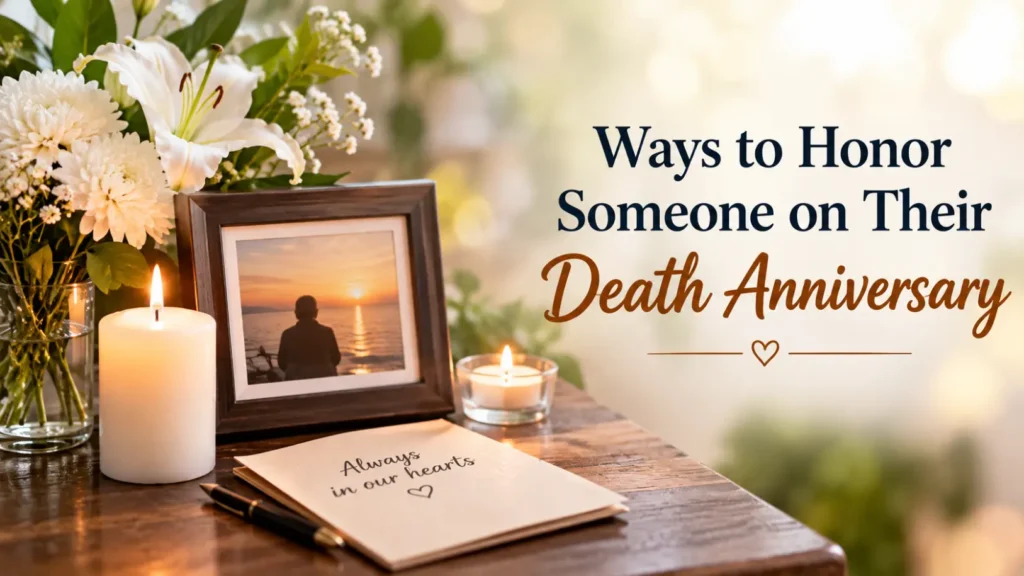
There is no universal rule for how a death anniversary should be observed. The most meaningful approach is often connected to the person’s life, personality, beliefs, or relationships.
Here are some possibilities:
Spend Time With Family
Gathering with people who knew the person can create space for stories and memories. It can be as simple as having dinner together.
Look Through Photos
Old photographs can help family members remember ordinary moments, celebrations, and shared experiences.
Visit a Meaningful Place
Some people choose to visit a gravesite, memorial, favorite park, place of worship, or another location connected with the person.
Light a Candle
A candle can serve as a simple symbol of remembrance during a private moment or family gathering.
Make a Donation
Some families choose to support a charity or community organization that reflects something the deceased cared about.
Write a Letter
Writing a private letter to someone who has died can provide a way to express thoughts, memories, gratitude, or feelings that are difficult to say aloud.
The National Center for PTSD notes that meaningful rituals, writing, prayer, visiting a grave, and commemorating a loved one’s life can be ways some people work through anniversary-related grief.
Personalization Idea: Choose an activity that genuinely connects to the person. A favorite meal, song, photograph, recipe, or place may carry more meaning than a formal ritual chosen simply because it is traditional.
First Death Anniversary: Why It Can Feel Different
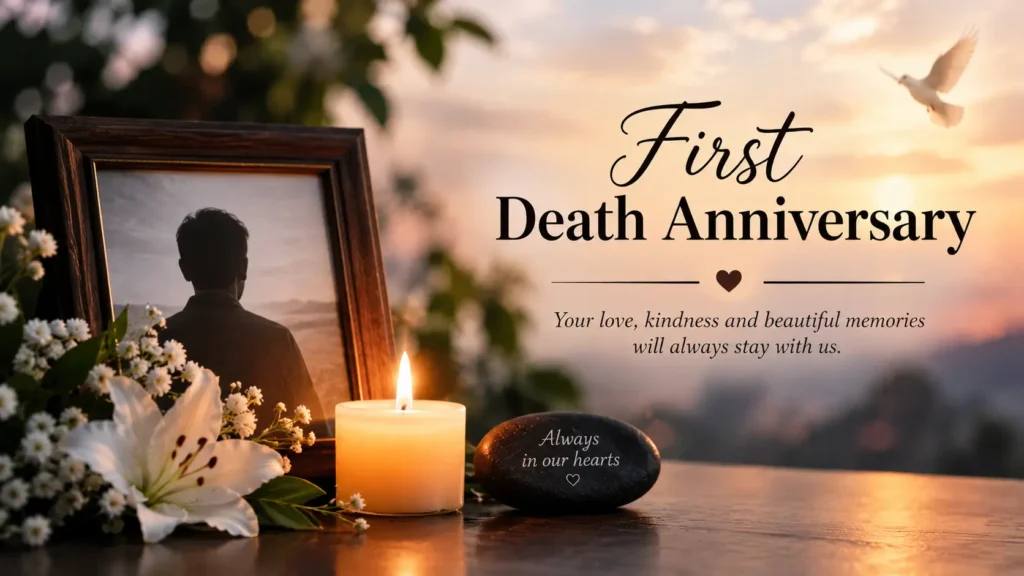
The first death anniversary marks one full year since a person’s death. For many people, it can be an especially meaningful date because the previous year may have included the first birthday, holiday, family gathering, and other important occasions without that person.
However, there is no universal emotional response to the first anniversary. Some people may experience intense sadness, while others may feel peaceful, grateful, numb, or even relieved. Feelings can also change throughout the day.
The U.S. Department of Veterans Affairs explains that anniversary reactions vary from person to person and can involve increased sadness, memories, anxiety, or other emotional responses around meaningful dates.
If you are supporting someone through a first death anniversary, you do not need to force a conversation. A simple message such as “I’m thinking of you today” can let them know they are not facing the date alone.
What to Avoid Saying on a Death Anniversary
Good intentions do not always lead to helpful words. Avoid making assumptions about how someone should feel or how quickly they should recover.
For example, phrases such as these can be difficult:
- “You should be over it by now.”
- “Time heals everything.”
- “I know exactly how you feel.”
- “At least they lived a long life.”
- “They would want you to be happy.”
- “Everything happens for a reason.”
These statements can unintentionally minimize someone’s individual experience of grief. Cruse specifically advises against telling grieving people that “time is a great healer,” assuming you know how they feel, or suggesting that they should simply move forward.
Instead, acknowledge the person and leave room for the recipient to respond in their own way.
For example:
“I know today may be difficult. I’m thinking of you and remembering [Name] with you.”
Final Tip: You do not have to fix someone’s grief. Sometimes remembering the person, listening, and simply being present are the most thoughtful things you can offer.
Frequently Asked Questions
What is a death anniversary?
A death anniversary is the yearly anniversary of someone’s death. It is often observed as a day of remembrance, reflection, prayer, or tribute. How people mark the date depends on their family, culture, religion, and personal preferences.
How do you wish someone on a death anniversary?
Use respectful language such as “Thinking of you today,” “Remembering [Name] with love,” or “Holding you in my thoughts on this anniversary.” A short, sincere message is usually enough.
What do you say to someone on the anniversary of a death?
Acknowledge the date and the person who died. You might say, “I’m thinking of you today as you remember [Name]. I hope the memories you shared bring you comfort.” If you knew the deceased, adding a genuine memory can make the message more personal.
What is the first death anniversary called?
In general American English, first death anniversary or first anniversary of the death is clear and easy to understand. Other names exist in different cultures and religions, so terminology can vary by tradition.
Should you send a death anniversary message?
Yes, if you have a relationship with the bereaved person and believe contact would be welcome. Reaching out can show that you remember the person who died and recognize that the anniversary may be meaningful. Cruse notes that mentioning the deceased and staying connected can be comforting after a loss.
Final Thoughts
A death anniversary is a yearly reminder of someone who has died and the place they continue to hold in people’s memories. For some, the date may bring sadness.
For others, it may create an opportunity to share stories, express gratitude, pray, or honor a meaningful life.
If you need to write a death anniversary message, keep it honest and gentle.
You do not need a long speech or a perfect quote. Simply remembering the person and letting their loved ones know that you are thinking of them can be meaningful.
The most important thing is to respect the individual’s grief and allow them to remember in the way that feels right for them.

I am Noah Williams, a content writer at Visstaro.com, creating heartfelt anniversary wishes and relationship content.
I love helping people express their emotions through meaningful words and thoughtful messages.
My goal is to make every special moment more memorable with simple and inspiring writing.